
Category Archives: Uncategorized

Art for the soul and finger tips

For the ninth year I was privileged to attend the Rendezvous Royale art auction and show at the Buffalo Bill Historical Centre in Cody, Wyoming.  I was allowed to touch the selected sculptures while my husband had the challenging task of describing the paintings to me.

The sculptures for the auction were ingeniously arranged among the paintings for their dramatic impact on the sighted visitors, but for me the exhibit unfolded inch by inch as the mystery of the pieces were revealed through my hands.   My hand-eyes interpreted the eye-hand creations for my mind’s eye.

At the entrance to the gallery I heard water. My husband guided my hands around a container.  I hugged the container to gauge the size of it, put my hands inside and found the water. With my wet hands I trace the figure.  At first I have no concept of the piece, but slowly my fingers found a life size grizzly bear sitting with one leg inside the water and the rest of him on the rim.  “Reach” said David and like the bear I was after the trout.  I had to stand on my toes to reach the tail of the fish. I explored the bronze grizzly who had plucked a trout from the stream by the Honored artist, T. D. Kelsey.  Just like the old instant photographs an image of the whole slowly developed under my hands.

As we wandered through the art, my fingers rolled over the finely executed shapes of man and beast.  I delighted in the contrast between the most subtle features and the bold, dramatic actions. The theme in the museum is western and, under my hands, bronze cowboys herded cattle, broncos bucked, a fawn galloped, steer, elk, and goat horns pricked my palms.   I could smell the metal and distinguished between rough and smooth surfaces.  I explored sculptures of Native Americans  in full regalia. Dainty bronze details of buttons on coats, the weft in a woven blanket, fish scales,  eagle feathers and wind in a horses main.  I’m overwhelmed by the precision and balance of the figures full of action and purpose.  Abstracts in marble wood, bronze and   glazed clay stirred my imagination. Such was the interaction I’ve had with the art during the festival.

Behind every piece is a story. Discovering the sculptures is like reading a book. My fingers start at the beginning of the book not knowing the ending.  As I touch along the plot develops into a surprise ending. The story book event sculpted by Vic Payne, called “train wreck,” affected me in this manner.   David placed my hands on a bear standing at attack. At first a bear on his hind legs is all that’s there for me.  Gradually I traced along a tree, then…oh my, a cowboy on a rearing horse trying to get away from the bear.  That is not the end yet!  Behind the cowboy is his pack mule loaded with the spoils of his hunt, elk meat and the trophy. Each detail acutely shaped to tell the tale. Though the bronze was cold under my fingers, the heat of the conflict was tangible. I imagine this scene could have taken place in the Thoroughfare, the wilderness outside Yellowstone, where I myself have ridden on a narrow mountain trail. Goose bumps spread over my arms and my scalp began to tingle as I remembered the narrow passage where no horse can turn around and flee leave alone with a pack mule in tow.

A scenario sprang to life as I caressed the delightful piece “And then what…?” by Charlie Ringer. Through the vitality of one of the cowboy figures I perceive a yarn is being spun and the reaction to the tale is conveyed in the body language of the listeners.  I stroked the dwarf-sized cooking utensils and other cowboy paraphernalia which surrounded the tiny campfire. If I could, I would have shrunk myself, climbed up to sit and listen to the tale and of course take a sip from the teensy bottle.

The task of describing the paintings rested on David’s shoulders. He painted with words what he saw on the canvases. A mountain lion ready to pounce, a laughing cowgirl introducing a little red hen to her horse. A rainbow colored grizzly bear, a trapper with his canoe…on and on he translated shape color and pictorial instance while I experience the paintings through my ears.

Usually art is inaccessible for the blind visitor, but during the art show and auction I’m allowed to touch the selected sculptures. In the galleries as well touch is welcomed for the visually impaired.

In sue Simpson’s gallery I touched work by T.D. Kelsey inspired by his latest trip to Africa.  Sue herself guided my fingers over three bronze Masai boys standing on one leg in a yoga-like position. These three comrades had their arms around each other, perhaps   talking or telling a tale or watching over their cattle. While probing     a stately  Masai warrior with his spear delicately balanced I listened to the voices of customers, excited over the display of art and I felt grateful for the inclusiveness of this exhibit.

My favorite touch experience in the Simpson gallery named “Field Trip” was of a female lion carrying one cub in her mouth while the other little one was following behind her. I immediately connected with my roots through the sculpture for, as a child in South Africa, this kind of scene was described to me in the Kruger National Park where when a cub gets tired the cub’s mother will carry it in her mouth for a while as they trekked from an old den to a new one.

For me, to experience art is to connect with art, and to connect with art is to experience art.  That is how it was again at the Rendezvous Royal art show and auction late September of 2009.
The (not-so) good old days—getting education as a blind student in South Africa

We often hear the joke from older folks today about how hard they had it in their school days—usually something about walking five miles to school every day through a foot of snow.

I didn’t have any snow in South Africa but I did get to struggle half-blind, through my schoolwork. In high school I had an embarrassing ugly pair of magnifying glasses which only focused when my nose was against the page.  Thankfully I sometimes had my friend, Marti, reading to me from our textbooks.  I couldn’t see the writing on the blackboard—yes in those days it was white chalk on a blackboard.  The learning trick was to memorize quickly after I finally figured out the print on the page.

Exam papers in high school were each three hours long. My principal got permission from the department of education to extend my exam session with another hour.  With my pitifully low vision I  couldn’t write on lined paper  and I was given blank pages  and a black pen so I could write as large as I needed  and see the contrast of the black ink against the white page.

My specialty was drama.  Till this day I thank my lucky stars for the school I attended and the teachers who recognized my ability in the theatre for they set my future career course.

On to the University of Pretoria

The requirements for university were three languages, Afrikaans, English and one foreign language, as well as science or math. I studied German and chose Math. Imagine math for someone who could hardly see! Somehow, someway I made it.

I was accepted at university and specialized in theatre.   Here it was the same situation—no aids, no Braille books, no books-on-tape, no talking computers just a constant barrage of text books I struggled to see to read.  Through the encouragement of teachers and professors I graduated but it was never easy. It was a constant struggle not only to study but also by now to pretend I saw things I didn’t.  In my country it was a shame to have a defect so I often found myself lying about my sight.

Today I’m happily, openly blind. It is so much easier socially to be totally blind.   Now I and others know I cannot see anything. Prior to total blindness I was never sure what I could see, perhaps a glimpse of something, or if the light was right more of something. If I didn’t know what I saw, how could I communicate to others what I could and couldn’t see. I’m pleased to take assistance in any way I can such as taking someone’s arm for sighted guidance.  Today I’m not tied up with pretending to see, my energy goes to performing speaking and writing.  My ultimate joy is the accessibility of information through all the latest devices and aids for the blind and I have become a reading fiend.

Educators for the Blind Conference

October 8-10, 2009, Macon Georgia

I performed my dramatic one woman show, Vibrations of Laughter -the story of Annie Sullivan, as a keynote before an appreciative audience of teachers for the blind. They graciously gave me a standing ovation. Actually two standing ovations, One for the Annie Sullivan and the other for the evening’s entertainment piece “Blind People Shouldn’t Vacuum” another one of my one-woman shows, sub-titled “An irreverent comedy.”

The next day during my talk on literacy I was interrupted by applause twice, once when I said, “Every morning when the American sun touches my cheeks I feel like blossoming because as a blind person In America I found so many opportunities and privileges.”  The next applause interruption came after my statement, “Today there is no reason to be blind and dumb.” I went further to explain what I meant by the word dumb—not to be educated enlightened and informed. For though blind people cannot see to read,   there is an amazing array of aids to make text accessible for reading, writing and research. Each one of these marvelous teachers was there to learn more about the latest technology and how to assist their students.

The exhibitors displayed talking software, voice activated software, sound screen savers, the latest in Braille and large print. As an example of what a visually impaired student can have today, a large flat screen with a camera was on display. The student can point the camera at a smart board and see what has been written on the smart board enlarged on the flat screen in front of the student. With a specialized pen the student can even take tests on the screen.  I drooled over all the aids that make learning so much easier than in my days as a student in South Africa. (I think I’ll follow this post with one on going to school blind in the old days in South Africa.)

When I speak to school children I say I wrote my book See the Ocean with my ears. I continue to explain how voice output software made it possible for me to become a writer speaker and performer. As I met the teachers for the blind and visually impaired at the conference my heart rejoiced over the work they do to uplift and educate those who need it most.

I repeat, each morning when the American sun touches my cheeks, I feel like blossoming.

Sunday Morning Float

October 11, 2009

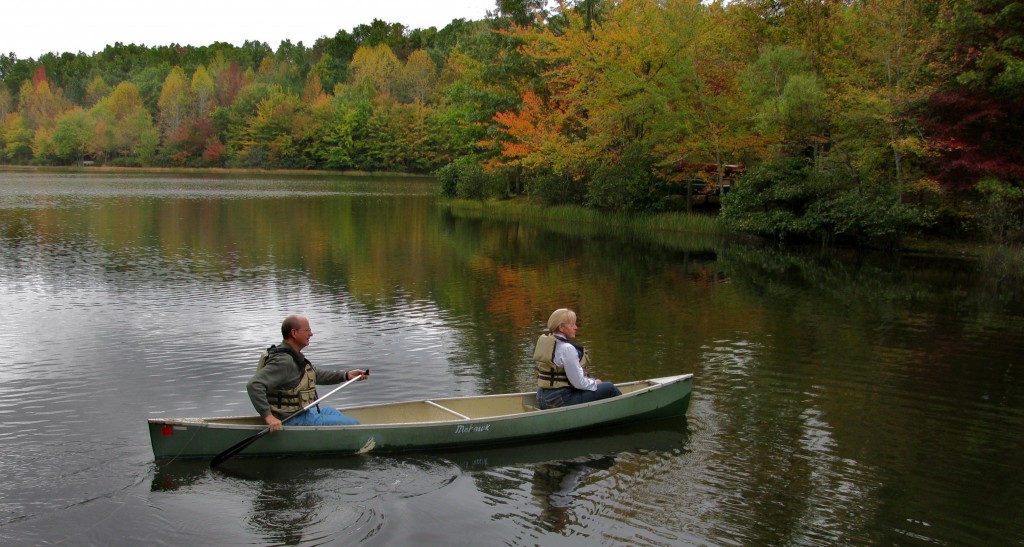
We canoe over red and gold fall reflections on a mirror calm lake

Under a blue-bonnet sky full of crow calls and little bird twitterings

Through olfactory sensations of bacon and maple syrup from the shore

I’m ferried Cleopatra-like by my husband

Across shiver shadows and sun fingers

We glide to old friends

On the porch of the hilltop getaway

For coffee and sweet remembrances.

“Poor Thing, Bless your Heart.”

When did I become “poor thing” I wonder.

These are the things I hope and believe I am…depending on my mood , it varies.

  • Caring, loving wife and partner
  • Compassionate friend
  • A bit weird …I’m an artist after all.
  • Reliable
  • Dedicated worker. I follow through and complete tasks
  • Good house keeper
  • Good cook…not
  • Careful with money
  • Community minded
  • Green living focus
  • Easily frustrated
  • Reading snob
  • Giving and caring sister
  • Empathetic listener
  • Volatile
  • Temperamental
  • Nail Biter
  • And often I’m flattered to be called, “full of piss, vinegar, and goat’s blood.” (Goat’s blood for climbing mountains like a mountain goat.)

I like me for these characteristics. I’m confident none of these attributes warrant the often heard remark…

“Poor thing… Bless your heart.”

I’m well read, well educated, well informed, well travelled, and live fully with the aid of technology in the 21st century.  And yet…and yet, my education,  years of living, experience,  speaking,  teaching,  writing,  and performing  become  a total nil  when I hear these bone-splitting,  brain-paining words. ”Poor thing, bless your heart”   With that one remark my ego blisters, my persona is obliterated, my soul turns into a lump of clay.  I become a torn blanket flapping in the wind.

People, mostly women, say…

“I like your top…poor thing bless…

The sweater you’re knitting is nice…  Poor thing etc.

Are you teaching, speaking, performing?  Poor …

Who makes your bed, cooks your food, plans a party, does your laundry, packs your clothes , waters your plants, dresses you… poor thing…

I know many disabled people all over the world. They are like me, just another human with a defect. I’ve never heard this comment spoken about them.

My brother is like me—dead-black blind. He is a fine human being, everybody loves him.  His career has been in banking in South Africa. He is also a motivational speaker and athlete – has run the New York Marathon, twice. He has climbed Kilimanjaro. He is a loving caring husband, raised two successful children. Or perhaps I should say he and his wife successfully raised two children.  To the best of my knowledge I’ve not heard the ‘poor thing’ comment about him either. Is it only women who mutter this about other women? Is it a Southern show of sympathy or is it simply a jealous put down?

I’ll ponder this issue for a while.